We present options, you decide
📘 Guides
Guides on Mean Well are designed to slow things down.
This is where we step back from individual products and look at the bigger picture — how tools are used, how choices add up, and what actually matters over time. Guides focus on clarity, context, and decision- making rather than rankings or urgency.
They’re meant to help you think, not rush.


Inside the Guides
Buying Frameworks
Use-Case Scenarios
Comparison Thinking
Guides are updated as categories evolve and understanding deepens.
The How to Choose Guide
🤔 How to Choose the Right Product
A practical buyer’s guide for confident decisions
Choosing the right product isn’t about chasing the highest price or the most features — it’s about finding what fits your life, your workflow, and your priorities.
Use this guide to compare smarter, avoid regret, and choose with clarity.
The How to Choose Guide
1️⃣ Start With Your Use Case
Ask: What problem am I solving?
Most buyers skip this step and end up paying for features they never use.
Examples
🎧 Headphones → Focus, travel, workouts, or casual listening?
💻 Laptop → Work tasks, creative software, gaming, or everyday browsing?
🛏️ Mattress → Back support, cooling, motion isolation, or budget comfort?
👉 Buy for your daily reality — not your “someday” needs.
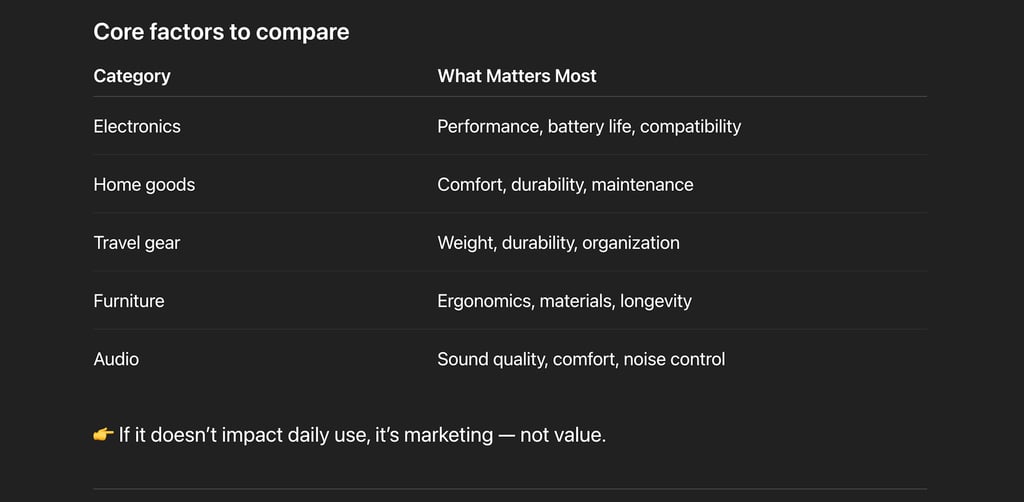
2️⃣ Prioritize What Actually Matters
Every product category has 3–5 factors that truly affect satisfaction.
3️⃣ Understand Quality vs. Price
Higher price doesn’t always mean better value.
Look for:
✔ Durable materials
✔ Proven reliability
✔ Warranty or support
✔ Consistent reviews (not just hype)
Be cautious of:
❌ Feature overload with poor build quality
❌ Trend-driven products with short lifespans
❌ Extremely cheap options that fail quickly
👉 True value = performance over time.
4️⃣ Check Compatibility & Ecosystem Fit
A great product that doesn’t fit your setup becomes a daily frustration.
Examples
Apple users benefit from Apple ecosystem integration.
Smart home devices must match your platform (Alexa, Google, HomeKit).
Accessories should match your device ports and OS.
👉 Convenience compounds over time.
5️⃣ Comfort & Usability Matter More Than Specs
Specs look impressive. Comfort determines whether you’ll actually use the product.
Consider:
Weight and feel
Interface simplicity
Setup time
Daily convenience
👉 The best product is the one you enjoy using every day.
6️⃣ Read Reviews the Smart Way
Don’t just look at star ratings — look for patterns.
Focus on:
Recurring complaints
Long-term durability feedback
Real-life usage scenarios
Ignore:
One-off defective unit complaints
Reviews about shipping instead of the product
Extreme opinions without details
👉 Patterns reveal truth.
7️⃣ Think Long-Term, Not Immediate Gratification
Impulse buys often lead to upgrades within months.
Ask yourself:
Will this still meet my needs in a year?
Is it expandable or adaptable?
Will replacement parts or support be available?
👉 A thoughtful purchase saves money and stress.




8️⃣ When to Choose Premium vs Budget
Choose Premium if:
You use it daily
Comfort affects productivity
Reliability is critical
It integrates with your workflow
Choose Budget if:
Occasional use
Backup item
Trying a new category
Temporary need
👉 Spend where it improves your life — save where it doesn’t.
9️⃣ Quick Decision Framework
Use this checklist before buying:
✔ Fits my primary use case
✔ Prioritizes the features I actually need
✔ Compatible with my devices or setup
✔ Comfortable and easy to use
✔ Reliable with strong long-term value
If it checks all five, you’re making a smart choice.
🔟 Why We Provide Comparisons
Our comparisons aren’t about declaring a single “winner.”
They’re designed to help you find what fits you.
Because the right choice isn’t universal — it’s personal.


Still Not Sure?
Still deciding?
Explore our comparisons and featured picks to see how top options perform in real-world use.
Important Reads
Follow Us
© 2026. All rights reserved.